


Vacuum glass for listed buildings and historic properties
Making a listed building more sustainable without compromising its character? That calls for a different approach to that used in standard renovation work. Existing window frames, narrow rebates and historic detailing often leave little room for traditional insulating glazing. Vacuum glass offers a particularly interesting solution.
Thanks to its very thin construction, vacuum glass can be fitted into existing wooden or steel window frames in many situations. This preserves the characteristic appearance, whilst significantly improving the insulation performance.
At Martin Glas, we don’t just look at the glass. We consider the whole picture: the existing window frame, the available rebate, the desired insulation value, the appearance and the technical possibilities.
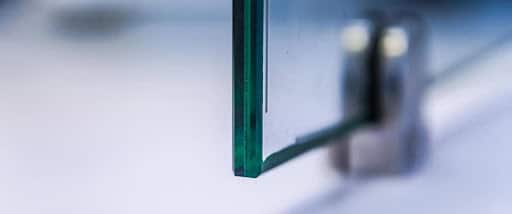
When it comes to historic and listed buildings, making them more sustainable is all about striking a balance. Energy consumption and comfort need to be improved, but you want to preserve the building’s characteristic features as much as possible.
That is exactly where vacuum glass comes into its own.
Traditional double or triple glazing is relatively thick. As a result, it does not always fit into existing period window frames. This means the window frame must be modified or replaced, which has implications for both the appearance and the cost.
Vacuum glass is considerably thinner. Depending on the product and design, very slim glass assemblies are possible. This means it can be fitted in many situations without having to completely replace the original window frame.
This offers a number of advantages:
• retaining existing wooden or steel window frames
• preservation of historical details
• significantly improved thermal insulation
• greater comfort near windows
• less heat loss
• less extensive alterations to the façade
As well as vacuum glass, there is another important solution in the field of historic building renovation: Monuglas.
Monuglas has been specially developed for situations where preserving the historic appearance and the detailing of the glasswork is of paramount importance. Whilst vacuum glass excels primarily in its extreme slimness and insulating properties in confined spaces, Monuglas is often chosen when:
• the original glass sculpture must remain as authentic as possible
• optical distortion must be kept to a minimum
• restoration requirements set by the heritage conservation authorities take precedence
• a more traditional glazing design is required within historic contexts
In practice, this means:
• Vacuum glass: maximum insulation in a minimum of space
• Monuglas: the perfect blend of aesthetics and heritage
In many projects, it is not an either/or choice, but a project-specific decision for each façade, window frame or window type.
That is why Martin Glas always assesses both options in conjunction with one another, so as to strike the right balance between energy performance, aesthetics, technical feasibility and the requirements of heritage conservation.
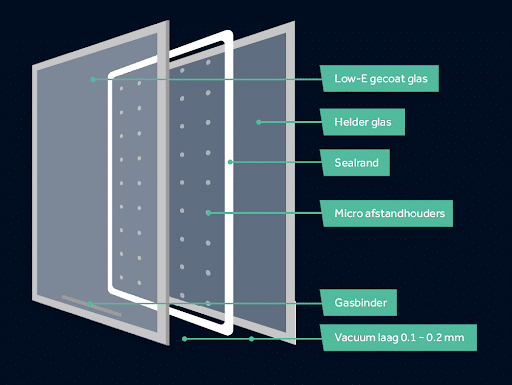
Vacuum glass consists of two sheets of glass with an extremely thin space between them that has been evacuated.
In traditional insulating glass, there is a cavity between the panes filled with air or gas. In vacuum glass, this cavity is virtually airless.
This significantly reduces heat transfer, whilst requiring only a small gap between the glass panes. The result is a relatively thin glazing unit with high insulating properties.
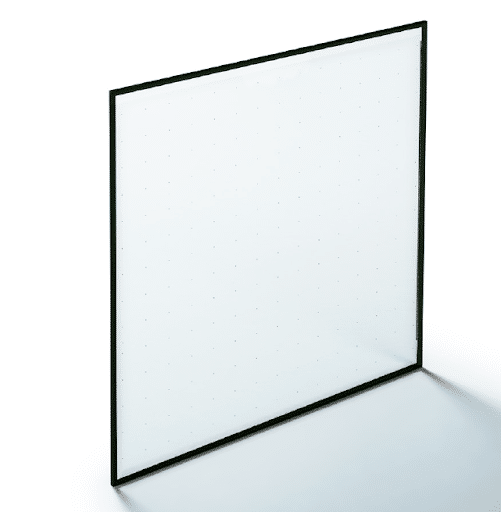
One of the main advantages of vacuum glass is that existing window frames can often be retained.
In the case of listed buildings, the original wooden or steel window frames often define the appearance of the façade. Replacing them is not always advisable and may, moreover, be complex from a structural or heritage conservation perspective.
The reduced thickness of vacuum glass makes it possible to use highly insulating glass within a much slimmer rebate.
Whether this is possible in a specific window frame depends, amongst other things, on:
• the available rebate depth
• the condition of the existing window frame
• the dimensions of the glass
• the desired glass configuration
• the necessary safety
• the glazing details
• any requirements relating to the preservation of historic buildings
That is why we assess each situation on a case-by-case basis.
Many historic buildings have wooden window frames that are still in good technical condition.
It would therefore be a shame to replace these window frames simply because of the switch to insulating glass. Moreover, old window frame profiles, glazing bars and detailing can be an important part of the architecture.
Vacuum glass makes it possible to significantly improve the insulation performance of the glazing whilst retaining as much of the existing timberwork as possible.
Original steel window frames also regularly pose a challenge when it comes to improving a building’s sustainability.
The frames are often particularly slim. It is precisely this slim appearance that makes them architecturally interesting, but leaves little room for conventional insulating glass.
Due to its thinness, vacuum glass may also offer possibilities in this area.
Not automatically.
Vacuum glass and Monuglas both offer robust solutions, but the right choice depends on the building and the window frame.
When carrying out a renovation of a listed building, we therefore look beyond just the insulation value of the glass.
Existing window frames
Is the window frame structurally suitable for reglazing?
Historic charm
Should the glass sculpture remain historically accurate, or can it have a more modern look?
Listed building requirements
What are the conditions set by the heritage committee?
Services room
Is there room for vacuum glass, or would a different design make more sense?
When renovating historic buildings, there are several possible solutions.
• HR++ glass: the best choice where there is sufficient space and window frames can be modified
• Vacuum glass: the best choice where space is limited and high insulation performance is required
• Monuglas: the best choice where strict aesthetic and heritage requirements apply
In many projects, the best solution is a combination of these three systems, tailored to the specific situation.
The benefits of better-insulating glass are not only reflected in your energy bill.
Old glazing can feel very cold in winter. This causes a draught near the window, making a room feel less comfortable.
With better-insulating glazing, the temperature on the inside of the glass is higher. This improves comfort around the window.
Both solutions are of interest not only to individual listed properties.
They also play an important role in larger renovation and conversion projects:
• historic apartment blocks
• historic schools
• old factory buildings
• churches
• offices in listed buildings
• listed town and village
• the repurposing of historic buildings
A monument requires more than just a price per square metre for the glass.
What construction method is technically suitable? What can the existing window frame support? What level of insulation is required? And how can the original appearance of the façade be preserved as much as possible?
In it, vacuum glass and Monuglas are always assessed side by side as serious alternatives.
Are you working on a listed or historic building? Please send us the details of the window frame, the glass dimensions and the required performance specifications. Our glass specialists will assess which glass solution is most suitable.
 EN
 NL_NL